
What's Covered on This Page
- Why Coastal Living Accelerates Skin Pigmentation
- Types of Pigmentation Treated at Our Murrells Inlet Medical Spa
- When is the Best Time for Pigmentation Treatment?
- What happens during a pigmentation treatment session?
- Maintaining Results in Murrells Inlet
- What types of dark spots can pigmentation treatment fix?
- When is the best time to start pigmentation treatment in Murrells Inlet?
- Why do dark spots seem worse after spending time near the MarshWalk or on the water?
- How many treatments will I need to see real results?
- Can I still get pigmentation treatment in the summer?
- Will my dark spots come back after treatment?
Need pigmentation treatment?
Book An Appointment. Call Jolie Visage Rejuvenation Centre now.
Why Coastal Living Accelerates Skin Pigmentation
If you live near the water in Murrells Inlet, you get a lot more UV exposure than the average person. It's not just from the sun itself. UV rays bounce off of water and sand and reflect right back onto your skin, and the salty air strips some of the natural moisture that would help shield you.
You're getting hit three times a day with it.
We see this happening all the time. Someone moves to the Inlet, starts spending a little more time on the boat, or lives just a few years from MarshWalk and then one day they notice dark patches starting to form on their cheeks or foreheads or above their lip. They wore sunscreen, sure. They tried to protect themselves.
But coastal UV is just relentless, and it can build up over time quickly.
According to the Skin Cancer Foundation, water can reflect up to 80 percent of UV. So when you're by the creek or out on the marsh, you're getting hit from the sun and the water all at the same time.
Here's what makes coastal pigmentation different than inland pigmentation:
- High UV levels stay present during cloudy days from humidity and reflected light
- Salt and wind remove natural oils from your skin and make you susceptible to sun damage
- Outdoor living means longer cumulative time in the sun, season after season
- Melasma and sun spots tend to show up in groups and not as individual marks
It's not always immediate. You might get sun damage this summer that you don't see until the next fall. Then it's much harder to treat. It's already settled deeper into the skin, and creams and over the counter options won't get it.
Most of the sun spots people bring to us have been developing for two or three seasons before someone notices it.
This is how pigmentation treatment here is different than it would in the Charlotte or Raleigh area. We are not just treating what you see on the surface of the skin, we're treating skin that is under environmental stress all the time. Your treatment needs to be designed for where you live. You don't have to stop going out, nor should you.
But your skin needs to be treated based on what you're actually getting exposed to on the coast versus what someone in the city sees, who spends little time in the sun.
Pigmentation treatment is one of our targeted facial and esthetics treatments.
Types of Pigmentation Treated at Our Murrells Inlet Medical Spa
Not all spots are the same, and that's something we are sure to cover with people when they come to visit us and are under the mistaken impression that there is one treatment that can fix all dark spots. Pigmentation treatment starts with finding out what kind of discoloration you are dealing with in the first place. Here in Murrells Inlet, our sun is hard on the skin all year long. Some of the most common forms we see at our office include:
- Sun spots (solar lentigines), flat, brownish areas of discolored skin on the face, hands, and chest caused by long-term exposure to the sun's UV rays.
- Melasma, larger blotchy patches, often due to hormones, pregnancy, or birth control pills.
- Post-inflammatory hyperpigmentation or PIH, dark spots left over after acne, burns, or any trauma to the skin.
- Dull, patchy skin, this is a more general lack of even tone and healthy color.
The most tricky pigmentation disorder is melasma. It can look like sun damage but isn't. We work with melasma patients on a weekly basis; what people don't realize is that melasma can actually be treated. But when treatment is too aggressive, melasma can actually flare back even worse.
According to the American Academy of Dermatology, melasma affects over five million Americans, mostly women.
Another pigmentation disorder is PIH (post-inflammatory hyperpigmentation). It occurs more often in people who've suffered from acne. After you finally clear your acne, you're left with the darker spots that don't seem to go away. They do.
And then there are sun spots. Being so near the MarshWalk means you spend a lot of time out on the water and in the sun; even though you are covered with sunscreen, your skin still gets a lot of UV rays from the sun, even when it's cloudy. You don't get a sun spot suddenly. It takes years to build up.
Each type of pigmentation disorder reacts differently. Some need chemical peels. Others do better with treatments like microneedling or medical-grade facials. In some cases, it's best to combine these various treatments into one layered plan for best results.
We identify what kind of pigmentation problem you have first, then we can tailor a plan for your specific case. That's what we mean by no guesswork.
When is the Best Time for Pigmentation Treatment?
Living in Murrells Inlet means that you're exposed to sun (UV rays) for about nine months of the year. That's great for your spirit, but not so good for your results.

Pigmentation treatment timing is just as important as pigmentation treatment itself. This is the most frustrating part that people often overlook. We see this every week. Someone comes in mid-July wanting to tackle dark spots, and we have to pump the brakes a little.
Starting certain pigmentation treatment protocols during peak sun season can actually make discoloration worse. Your skin is already inflamed from UV exposure, so adding a chemical peel or aggressive treatment on top of that is asking for trouble.
The pigmentation treatment season for Murrells Inlet residents is late October to mid-March. The sun isn't as strong at that time of year; you aren't outside on the beach or on the boat as much; your skin is able to recover between treatments, without having constant sun damage undermining your skin health.
However, don't think we can't treat you during summer months. Fortunately, there is so much you can do year-round to manage and control dark spots before they get worse. Options include a medical grade facial that brightens gently without aggressive exfoliation. It can be a Vitamin C facial to create some antioxidant defense in the skin.
It could be adjustments to the product line you use at home to set you up for the next round of pigmentation treatment in the fall. It is a matter of choosing an SPF that really does the job on a sunny afternoon at Huntington Beach State Park. Think of summer as the prep and fall as the action. That is when we determine how your pigmentation is reacting to the sun in order to know how much we can push once the weather cools down.
If you're reading this in September or October, that is the time to be. Your skin has been showing us its moves all summer. We're seeing the whole picture of your discoloration and setting a treatment schedule that is realistic. January?
Ditto, with months of low sun exposure ahead. We're not dawdling. That is called timing.
Need help with pigmentation treatment?
Book An Appointment. Jolie Visage Rejuvenation Centre is ready to help.
What happens during a pigmentation treatment session?
You walk in and we start by talking. It's the most surprising part for most people. We sit and examine what we're working with. What type of pigmentation do you have?
What level is it? What have you tried to clear it? It's not unusual to hear a client has tried an over-the-counter cream that did absolutely nothing. That's fine.
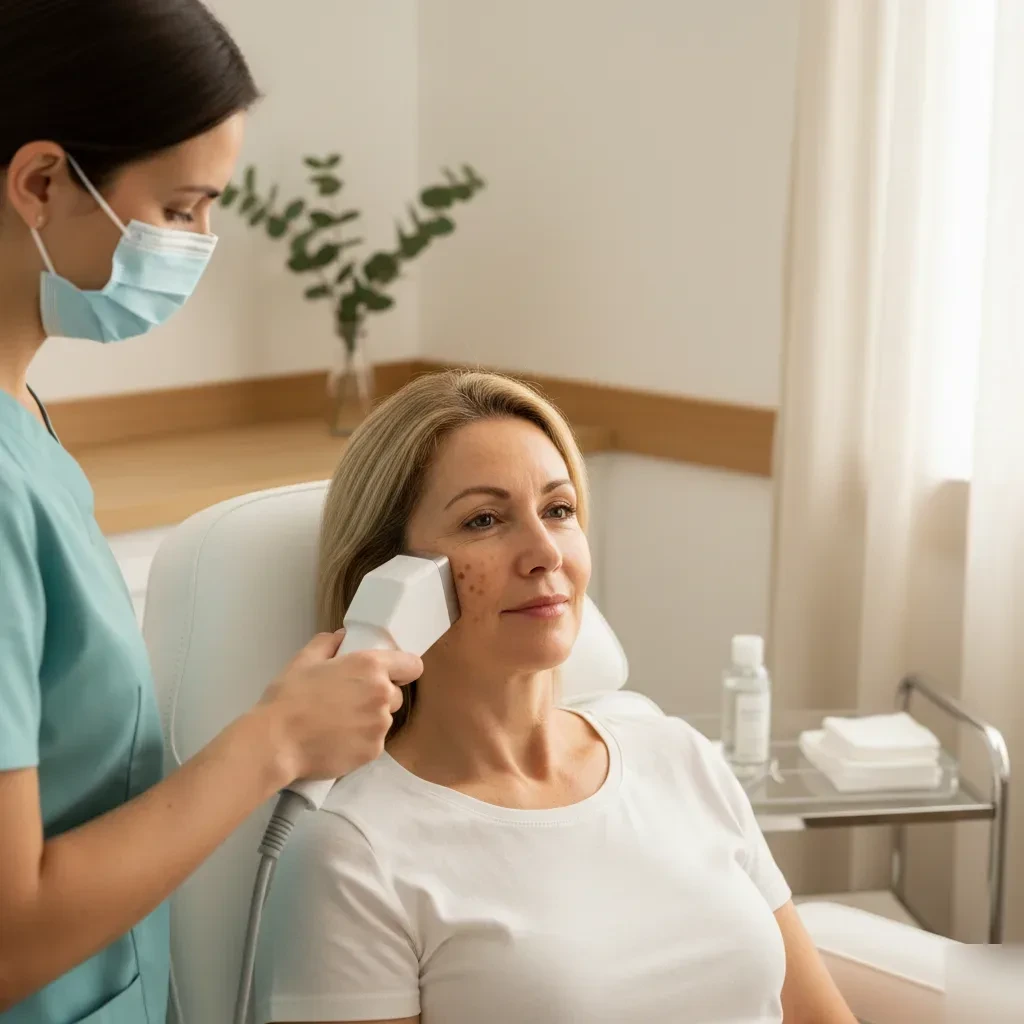
Pigmentation treatment begins with assessment, not guessing. Here's how a session flows: We clean the target area and evaluate the skin with proper illumination. We determine which treatment you are suited for, whether it's a chemical peel, microneedling, or a medical grade facial for dark spots. We protect the skin as necessary.
The procedure runs anywhere from 20 to 45 minutes. We put a few products on your skin before you head out. Most of our Murrells Inlet patients have said the same. They anticipated a lot more discomfort.
Chemical peels tingle a little. Microneedling is light scratching. It's not unbearable.
We monitor the reaction of the skin in order to adjust as we go. If a sensitive spot is reacting quickly, we slow it down. If a larger patch requires more attention, we stay with it. There's no cookie-cutter here; each pigmentation treatment is customized by the clinical team and responds to every patient differently.
We see many patients living along the Inlet Square neighborhood who are living with sun damage that they've had for decades. They come in thinking they want something aggressive. Sometimes they need it. Sometimes all they need is a targeted enzyme facial and a vitamin C treatment.
We figure that out in the moment. You won't leave confused about what happened. We explain aftercare, tell you what to expect, and set expectations for when you're due back. If you're ready to see what a pigmentation treatment can do, give us a call.
Maintaining Results in Murrells Inlet
Living near the water means you'll be outside more than most people. That's just reality.

UV exposure is the #1 cause of pigmentation returning after treatment. When we live here, we're constantly fighting reflected UV off the MarshWalk water, the creek, and boat decks. The average person might not realize that reflected sunlight is just as destructive as direct sun. Your results stay only as long as you protect your skin.
Here's what we recommend after pigmentation treatment to keep your skin clear long-term:
- Sunscreen at least SPF 30 every morning, no matter how cloudy it is
- Reapply every two hours if you're out in the water or working in your yard
- Wear a wide-brim hat on the boat, on MarshWalk, or sitting on the deck
- Vitamin C serum in the AM provides an extra defense layer for free radical damage
- Return for maintenance treatments at the intervals we establish together
Most folks who skip sunscreen and then go spend a weekend at the beach always find dark spots creeping back in. It happens fast. You don't have to stay indoors to keep your complexion protected. You moved to the coast because you like being outside.
We just want you to enjoy it without undoing everything we worked on. A good routine takes 60 seconds or so in the morning.
We also advise combining daily home care with periodic maintenance treatments. A medical-grade facial or light chemical peel every couple of months helps keep your complexion balanced and identifies early changes before dark spots become visible again. It's like getting your oil changed. Small investments of time and care prevent larger issues later.
Your complexion changes all year long, here in Murrells Inlet. Summer humidity, salt air, more aggressive UV from April through October. We make adjustments to your treatment plan as the season changes to your pigmentation remains gone all year. We want your results to remain stable regardless of the weather.
This is how you differentiate between one-time treatment versus a long-term solution.
Frequently Asked Questions
Common questions about pigmentation treatment services in Murrells Inlet
What types of dark spots can pigmentation treatment fix?
Pigmentation treatment can address sun spots, melasma, post-inflammatory hyperpigmentation, and uneven skin tone. Each type behaves differently, so we identify exactly what you have before starting. Sun spots are flat and brown. Melasma is blotchy and hormone-related. PIH is leftover darkness from old acne or injury. Knowing the difference changes everything about how we treat your skin.
When is the best time to start pigmentation treatment in Murrells Inlet?
The best time to start is late October through early March. Murrells Inlet gets strong UV exposure about nine months a year. Starting treatments during peak summer sun can make dark spots worse, not better. Fall and winter give your skin time to heal between sessions. If you're reading this in September or October, you're in the perfect window to begin.
Why do dark spots seem worse after spending time near the MarshWalk or on the water?
Water reflects up to 80 percent of UV radiation back onto your skin. So near the MarshWalk or out on the marsh, you're getting hit from above and below at the same time. Salt air also strips your skin's natural oils, leaving it more vulnerable. That's why Murrells Inlet residents often see pigmentation build faster than people living further inland.
How many treatments will I need to see real results?
Most people need more than one session to see lasting improvement. Some pigmentation clears in two or three treatments. Deeper discoloration, especially melasma, often needs a layered plan over several months. We map out a realistic timeline after we see your skin in person. You'll know exactly what to expect before we start anything.
Can I still get pigmentation treatment in the summer?
Yes, there are treatments that work safely during summer months. We focus on gentle brightening facials, vitamin C treatments, and at-home product adjustments during peak sun season. More aggressive options like chemical peels are better saved for fall. Summer is a great time to plan and prepare your skin so you get better results when cooler weather arrives.
Will my dark spots come back after treatment?
They can return if sun exposure continues without protection. Living in Murrells Inlet means ongoing UV exposure, so an SPF routine is non-negotiable after treatment. We help you build a realistic protection plan that holds up during daily coastal life. Maintenance treatments and the right at-home products keep your results lasting much longer than a one-and-done approach.