
What's Covered on This Page
- Understanding What Peptide Therapy Can Do for You
- Who Do We See Benefit the Most From a Peptide Regimen
- How Are Peptide Protocols Created Under Medical Supervision?
- A Realistic Timeline: What to Expect Week by Week
- What does peptide therapy actually do, and how fast will I notice results?
- Am I a good candidate for peptide therapy if I'm not dealing with a major health issue?
- What happens at my first peptide therapy appointment in Murrells Inlet?
- Can I do peptide therapy if I'm already on hormone replacement or a weight loss program?
- Does the coastal climate in Murrells Inlet affect how peptide therapy works or how it's stored?
- How long do I need to stay on a peptide protocol to see lasting results?
Understanding What Peptide Therapy Can Do for You
Did you know your body naturally produces thousands of peptides?
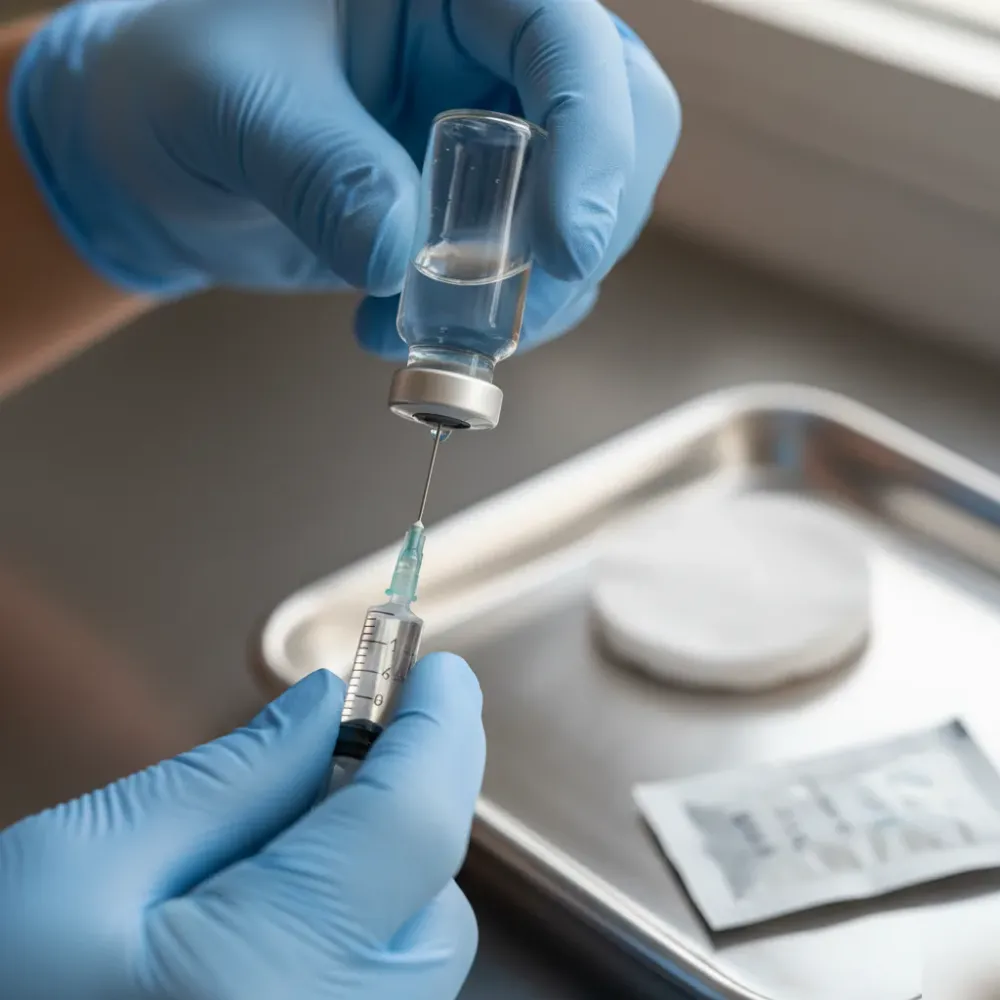
These are simply short chains of amino acids that send signals to your cells. Some tell your pituitary gland to release growth hormone. Others help to repair muscle and connective tissue, decrease the amount of inflammation in the body, or even help you rest more soundly at night. The unfortunate thing is that as we age, our bodies produce fewer of these compounds, and those that they do produce are not as efficient. Peptide therapy is all about helping to supplement those lost signals. We aren't giving you additional hormones. Rather, we're helping to restore your body's natural communication pathways so that your tissues can heal and your hormonal system can perform at an level.
While we have had several people who have heard of peptide therapy and come to our clinic in Murrells Inlet specifically because of them, most of our clients don't actually come in and ask for it by name. Usually, they have come in complaining that they are chronically tired. Or they can no longer bounce back from an afternoon workout like they used to. Or they say that nothing they've tried has fixed their poor quality sleep. Usually, our patients end up getting benefit from peptide therapy. So, what do they do?
We find that peptide therapy most commonly addresses:
- A deeper level of restorative sleep
- Faster recovery following a workout or a sports injury
- Less overall joint pain or inflammation
- Better overall daytime mental clarity
- Healthier changes in body composition
Certain peptides, such as BPC-157 and CJC-1295 have demonstrated efficacy in tissue repair and in supporting growth hormone production, respectively, according to the National Institutes of Health. This is exactly what we see clinically.
Peptide therapy isn't a magic bullet and doesn't work in isolation. It works because it's helping your own cells do what they're programmed to do. Think of it this way. The blueprints for your cells are all already there. Peptides are simply making sure those instructions get delivered. It's no wonder that we have clients in the Inlet Square area who notice a difference in sleep quality within their first 2 weeks, and then other patients who notice an improvement in their physical recovery. Everyone responds differently.
Also, this is something that you won't hear about on many medical websites, but peptide therapy is a legitimate, evidence-based medical treatment, and requires a physician's oversight and regular follow up in order to safely optimize the results.
Peptide therapy is one of the newer additions to the Jolie Visage health spa.
Who Do We See Benefit the Most From a Peptide Regimen
You don't need a medical diagnosis to feel like you aren't right.
This is the one common thread that we have picked up from our first-time clients walking in here to our Murrells Inlet practice. They don't usually have a serious medical diagnosis. They just feel like something is off. It's harder to sleep than in the past. It takes them forever to recover from exercise. They are exhausted by 2:00 PM everyday. And it never seems to get better. This is a common pattern, and we typically see these patients do quite well with peptide therapy. What kind of people tend to see the most benefit from peptide therapy?
Actually, the application scope is far broader. These are the patient groups we commonly see with great success:
- Anyone 35 years and older that is struggling with weight loss, recovery times, or sleep
- Anyone in the Inlet Oaks community and along the Marshwalk who is regularly exercising but not recovering as well as they used to
- People using hormones already and hoping to amplify those results
- People struggling with brain fog, low energy, or general malaise that a blood test doesn't identify as a problem
However, peptides aren't just about sports and performance. We've had patients walk in who are sick and tired of sleeping only three to four hours a night and try our protocols, and for the first time in 10 years, we get that to go back to six or seven hours a night. And it has huge effects. Your mental mood goes up. Your appetite is more regulated. Your desire to move your body is higher. Here's another common thing that I think people aren't expecting. It's not always the patients who have the most obvious signs of dysfunction that will most benefit from our peptide therapy. Oftentimes, it's the ones who have just been quietly compensating for years, coffee all the time, never working out, telling themselves, "It's probably just how old I am getting." It doesn't have to be like this.
We also see a lot of success with patients already using our other treatment options at the clinic, whether those are medical weight loss programs or testosterone replacement therapy. In those cases, peptides work well in conjunction with other treatments. Peptides do not replace the other treatments. Instead, they provide another tool in our toolbox to help optimize how your body responds to the treatments you are already doing well.
Not sure if you are a good fit for our peptide therapies? I have never met anyone who walked into my clinic and wasn't thrilled to see the results of their peptide therapy who was also not thrilled that they tried it in the first place. A brief conversation with a member of our team in Murrells Inlet is all it takes to find out if you would be a good fit for our peptide protocols.
How Are Peptide Protocols Created Under Medical Supervision?
You can't simply walk into the treatment room at the clinic here in Murrells Inlet and receive a vial. That is not the nature of peptide protocols. Every peptide protocol that is designed at the clinic here in Murrells Inlet starts with the blood work. We will always want to run a full lab panel on you to get a true understanding of what is happening inside the body before we ever select a peptide. We look at your hormones. We look at your inflammatory markers. We look at the metabolic panels. The blood work tells you where you are at today, not where you think you are at. That is often a shock to the system for many patients, that their blood work comes back so different than what they might have expected.

Once we have your labs, we then meet and talk through those labs and also what is happening in real life. If you have not been able to lose weight despite trying to do all the right things, then tell us about that. If you cannot sleep well and always have the energy you need in the afternoon, then tell us about that. We hear all of the numbers and all of the real things.
Once we've gone through those two pieces, building a peptide protocol follows a standard path:
- Review your labs and medical history together
- We pinpoint the peptides that align with your goals and your lab results
- We begin with a conservative dose and establish a timeline for titration
- We book your first follow-up appointment within four to six weeks
- We repeat labs at regular intervals to confirm we're heading in the right direction
The protocol usually changes following that initial follow-up. Your body reacts, the labs tell the story, we fine-tune. That's the entire reason you have physician oversight. No one should be guessing with peptides based off of something they read on the web.
Our team is credentialed and stays up to date on all things peptide research so you're not receiving a one-size-fits-all from 2019. We monitor your progress each and every visit. If something isn't working, we identify it quickly and we make the change.
However, what matters is most. The protocol revolves around you and your life. Your timeline. Your tolerance. Your goals. Not a blueprint. A 30-year-old athlete who is rehabilitating an injury requires a protocol completely different than a 55-year-old executive in search of a return to vitality. We manage them separately because they are separate.
This kind of consideration takes time in the beginning, but will save you a lot of time and frustration in the end.
Need help with peptide therapy?
Book An Appointment. Jolie Visage Rejuvenation Centre is ready to help.
A Realistic Timeline: What to Expect Week by Week
No one enjoys being told "be patient." I'm sorry you've heard. But peptides are no magic bullet; your body needs time to adjust.

Here's what the majority of my Murrells Inlet clients report at every stage:
- Weeks 1-2: Better sleeping. Usually the first thing everyone mentions. Sleep more solidly and less frequently waking in the night. Near the Inlet, sometimes feel more relaxed while you're out and about. Energy may not be a great deal higher yet but there's definitely a subtle shift.
- Weeks 3-4: Faster healing. Post-yard-work or workout aches aren't as long lasting. Brain fog dissipates. You may also notice that your mood is more stable than it has been in many months.
- Weeks 5-8: This is where the game gets good. Energy increases. Lean muscle begins to grow, assuming you're eating well and working out. Complexion glows. Folks near and around you start asking you what you changed.
- Months 3-6: You reach peak potential. Increased lean muscle mass you can clearly see. Accelerating fat loss. Fewer joint complaints. Your bloodwork improves overall.
This is all I say to everyone. Weeks one and two seem quiet. Don't quit.
The clients that persist with peptide therapy through the first month and beyond invariably say, "Thank you I didn't stop" or something equivalent to that. Those that do feel frustrated the most early on and they're the same clients that see the greatest results in month three. Your body is not ignoring the peptides. It is taking the time to rebuild systems that have been running down for years. The rate at which you see results depends a great deal on your baseline. If you have spent years struggling with poor sleep and elevated stress, you may feel the changes happen quite quickly, while those of you who have been in fairly good shape may not experience them until several weeks later. That is perfectly normal, and we keep track of your progress at every check-in. Feeling like you're "not getting anywhere"? This is a very common complaint, and the answer is always, "You're right where you're supposed to be." We're here to show you the numbers to prove it.
Staying in the Game: Peptide Therapy for the Coastal Active Lifestyle
You moved to Murrells Inlet, didn't you, because you had no intention of spending your retirement sitting on a couch? You want to go fishing, kayak through the marsh, bike around the Waccamaw Neck, and go for a walk on the MarshWalk after dinner. This is why we live in South Carolina! But when it takes you days longer to feel okay after an intense day of activity than you expected, or when your knees just seem to bother you all of the time, it starts to seem like your body is just going against you. This is a complaint we hear from patients every day. being active, enjoying the outdoors, and not being able to recover as quickly and easily as they had five years ago. Peptide therapy can be a very valuable addition to this way of life.
Certain peptides can be used to help facilitate the body's natural healing abilities so that muscle tissue can recover more quickly and joints are less likely to be stiff and aching after prolonged use. We do not use them to transform you into a different version of yourself. You already know what you want. We want to give you the tools to be able to maintain that. Most patients who start a regimen like this have a few things they have noticed as they progress through it:
- Less soreness the next day from fishing, hiking, or other activities.
- Improved sleep quality, which directly aids in recovery.
- More consistent energy levels throughout the day.
- Decreased pain in joints while performing repetitive tasks like casting or rowing.
Most of our patients in the Burgess and coastal communities who start this treatment will begin noticing significant changes within the first few weeks, although others may report improvements earlier than that. It is very common that patients arrive at our practice having tried everything else: glucosamine, turmeric, stretching regimens, steroid injections, etc. These patients have been diligent with their health but they have not found anything that "works." Peptide therapy is not going to make the same promises. We help support your body's ability to heal at a cellular level rather than suppressing any one symptom. So if you are like us and refuse to slow down, good, because you shouldn't have to! Give us a call and let's talk through which protocol makes the most sense your lifestyle, as well as coordinate with other patients doing hormone therapy or medical weight loss in the clinic, since certain treatments work better for certain outcomes. We consider your level of activity, your goals, and how you live your life as a whole to determine the best plan of action for you.
Peptide Therapy is one of the health spa services at Jolie Visage in Murrells Inlet. If you're considering more than one treatment, we'll help you build a plan that fits your goals.
Frequently Asked Questions
Common questions about peptide therapy services in Murrells Inlet
What does peptide therapy actually do, and how fast will I notice results?
Peptide therapy sends signals to your cells that help with recovery, sleep, and inflammation. Most people in Murrells Inlet notice better sleep quality within the first two weeks. Others feel the recovery changes first. Everyone responds a little differently. That's why we track your progress and adjust your protocol after the first four to six weeks. It's not a quick fix, but most patients feel real changes within the first month.
Am I a good candidate for peptide therapy if I'm not dealing with a major health issue?
Yes, you don't have to be sick to benefit from peptide therapy. Many patients at our Murrells Inlet clinic come in feeling tired, foggy, or slow to recover — not because of a diagnosis, but because something just shifted. Adults over 35 who exercise regularly, sleep poorly, or feel that afternoon energy crash are often great candidates. A quick conversation and some lab work will tell us if this is the right fit for you.
What happens at my first peptide therapy appointment in Murrells Inlet?
Your first visit starts with lab work. We check hormone levels, inflammatory markers, and metabolic panels before recommending anything. Then we sit down and talk through what you're actually experiencing day to day. From there, we build a protocol around your specific labs and goals. Nothing gets prescribed until we understand where your body is right now. Plan to spend some time at that first visit — it's worth it.
Can I do peptide therapy if I'm already on hormone replacement or a weight loss program?
Yes, peptides can work alongside testosterone replacement therapy and medical weight loss programs. We see great results when patients combine these treatments. Peptides help your body respond better to what you're already doing — they're not a replacement for other therapies. We review your full health history and current medications before building your protocol so everything works together safely.
Does the coastal climate in Murrells Inlet affect how peptide therapy works or how it's stored?
The heat and humidity along the Murrells Inlet coast do matter when it comes to storing peptides properly. Most peptides need to stay refrigerated and away from light to stay effective. We walk every patient through proper storage at home so you don't lose potency. If you're active outdoors near the Marshwalk or spending long days on the water, we also factor your activity level into your dosing schedule.
How long do I need to stay on a peptide protocol to see lasting results?
Most patients run a peptide protocol for three to six months before deciding on a long-term plan. Results build over time, not overnight. After your first follow-up around four to six weeks, we recheck your labs and adjust the protocol based on how your body responded. Some patients cycle on and off. Others continue longer. Your timeline depends on your goals and how your body responds to the initial protocol.