
What's Covered on This Page
- Understanding Melasma and the Reality of Recurrence
- The Unique Challenges of Treating Melasma Along the Coast
- Realistic Treatment Options for Melasma
- What to Expect at Your Melasma Treatment Appointment
- Maintaining Your Results Through The Year-Round Sun
- Does living near the coast in Murrells Inlet make melasma harder to treat?
- Why does my melasma keep coming back after I treat it?
- What melasma treatments actually work?
- Can men get melasma too?
- What should I expect during my first melasma treatment visit?
- Does heat alone worsen melasma, or is it just sun exposure?
Need melasma treatment?
Book An Appointment. Call Jolie Visage Rejuvenation Centre now.
What Our Patients Say
Understanding Melasma and the Reality of Recurrence
It's a Tuesday morning when you notice something new. Your eyes catch the reflection in the bathroom mirror and you see dark brown spots appearing in odd places. You haven't seen dark blotches on your face like that in at least six months, yet now they seem to have suddenly popped up over your cheeks, or right above your lip, or across the forehead.
You figure you must have caught some extra sun this past weekend or maybe a pimple you didn't notice didn't heal quite right and is leaving a stubborn mark that refuses to go away.
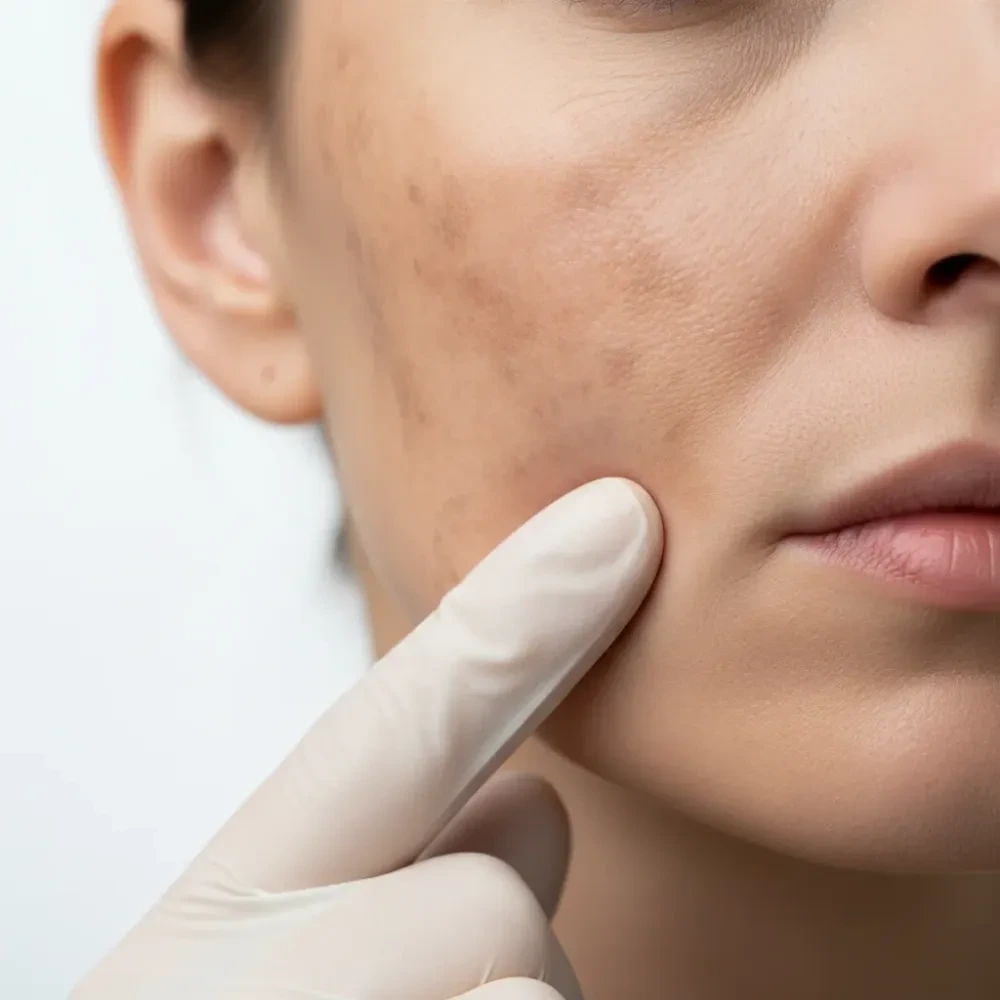
But weeks and months pass and you still notice the spots aren't going away, and then they seem to be getting bigger. That is melasma, a chronic condition where your skin cells produce too much pigment. Melanocytes (cells that make melanin pigment) produce too much and deposit it in clumps, causing you to get patches of dark, brown or gray skin that look like they are only on the skin's surface, when in reality they sit deep below it. At our Murrells Inlet office, we see these cases all the time.
It starts to seem like more patients come to us when summer and warmer weather come around in South Carolina since we naturally get stronger, warmer UV radiation in the coastal areas.
Now a key question comes up: why does melasma come back so much?
Well, the truth is that melasma almost never occurs just once, it returns quite a few times. The following are some of the most common triggers for melasma recurrence:
- UV radiation (from sunlight or tanning salon lamps) that can occur even on overcast days when you are walking the Marshwalk
- Hormonal changes (often associated with pregnancy, birth control pills, or menopause)
- Excess heat (not only sun, but also infrared radiation from a hot kitchen, exercise, or extreme humidity)
- Certain skin care products that may cause irritation and increase pigment production
It affects more than 5 million Americans. Most of those who have melasma are women between 20 and 50 years of age. Melasma can certainly affect men; we see many males who are confused as to why they have suddenly started developing dark patches.
The hardest thing for melasma patients to accept is when they put some drug store moisturizer on and they think they see a little change, then the pigmentation comes back and it comes back even worse. This happens because they never got at the cause of melasma; the medication was only masking the symptoms and the hyperactive melanocytes below the surface continued their random behavior.
Melasma treatment must be viewed comprehensively for any patient including skin type, hormonal history, and sun exposure. Because our Murrells Inlet patients get a ton of UV intensity year-round this can make a huge difference when deciding treatment options. Short term solutions won't work. A successful treatment plan must be individualized around your lifestyle.
Melasma care is one of the many medical spa services available at Jolie Visage.
The Unique Challenges of Treating Melasma Along the Coast
Because you moved to Murrells Inlet for the ocean breeze, you probably aren't surprised to hear your melasma doesn't quite feel the same way about that.
The coastal lifestyle puts your skin in exposure to the kinds of UV radiation you won't find in the dermatology books. The problem is, it's not just that you're exposed to extra UV radiation when you walk outside.
Since you live next to the ocean, UV radiation bounces off the water and up, and off the beach and across your face. So, even if you are chilling under a beach umbrella at Huntington Beach State Park, you are still getting hit by UV rays that are being reflected from all the other surfaces around you. And, yes, that constant UV exposure can activate your melanocytes and can take you back weeks in your melasma treatment in just one afternoon.
In fact, we joke that this happens too frequently. Clients will come into our practice and we will begin their treatment, the patches will begin to lighten up and then they will go to the MarshWalk for the weekend and they will come back even darker. It is frustrating for them, and once we explain why that happens, it makes sense.
Here is what contributes to why the coastal climate is so challenging to manage melasma in:
- High humidity makes it much easier for UV light to penetrate the skin.
- The air with the salt can also deplete the natural protection of the skin.
- UV reflection from the water can almost double the amount of UV you are getting and you will never notice it.
- Living by the coast usually means you are out in the sun longer in the course of the year.
But it is also important to note that studies have shown that melasma is not just impacted by UV light. Visible light and heat can impact melasma as well. If you are driving along Highway 17 with the windows open, walking to lunch and even sitting next to a sunlit window can trigger melasma. You may not notice these things happening during the day.
Your skin and your melanocytes will notice.
And, another thing our patients are surprised to learn, Murrells Inlet may be gray and cloudy but the UV light can be up to 80% of it's usual strength. The clouds do not block out the sun as it feels like they do. We have had numerous patients admit to wearing sunscreen only on "beach days". This is often why their melasma was coming back.
And it doesn't mean you can't treat melasma in the Lowcountry. You can, your regimen just needs to be adapted to where you are living rather than something that is just designed for someone living on the mainland. That is the difference between melasma that is back to normal the next week and melasma that is managed throughout the year.
Realistic Treatment Options for Melasma
You can read about all types of treatments for melasma but not all of them work. Many of our clients come into our Murrells Inlet practice after months of using off-the-shelf products with no change. Which is frustrating. So, we would like to share the treatments that do work.

The bottom line is that melasma treatment is not just one method. Your melanocytes do not develop overnight and you should not expect a solution overnight. This is why it is important to know what treatment works best for melasma but we do have professional treatments available that will make a difference.
Which Treatments We Recommend and Why
These are the treatments we frequently recommend for our melasma clients:
- Chemical peels: Those that target superficial hyperpigmentation but won't irritate melasma (which typically worsens with inflammation).
- Medical-grade facials: These can utilize active ingredients that act at a deeper, more potent level than what you can purchase at your favorite drugstore.
- Microneedling: To induce faster skin turnover and better absorption of topicals.
- Pigmentation treatments that pair clinical-strength brightening agents with in-office procedures.
We rarely use just one method. Nine times out of 10, you'll see the best results by starting with any two to three of the above treatment protocols.
But there is one thing people don't tell you: melasma skin can actually become worse after aggressive treatment. Melasma is a different species of hyperpigmentation, requiring a gentler approach, which is why we start conservatively and work our way up based on your skin's response.
What kind of treatment do you think is best for you? That really depends on a variety of factors, including skin type, depth of pigment, and triggers. Is your melasma hormonal? Is it sun-triggered, heat-induced, or, in a majority of cases, all 3!
Remember, you might actually spend a lot more time in the sun when walking around at the MarshWalk than you realize.
If you want to know what the first step of treatment might look like for you, give us a call.
That's why we're fine-tuning your treatment as we go, even though we would love to get you to 100% in the first visit. In many ways, the "perfect" treatment on day 1 matters less than making sure you're on the right treatment as you go.
Need help with melasma treatment?
Book An Appointment. Jolie Visage Rejuvenation Centre is ready to help.
What to Expect at Your Melasma Treatment Appointment
You arrive, we talk. That's where it all begins.
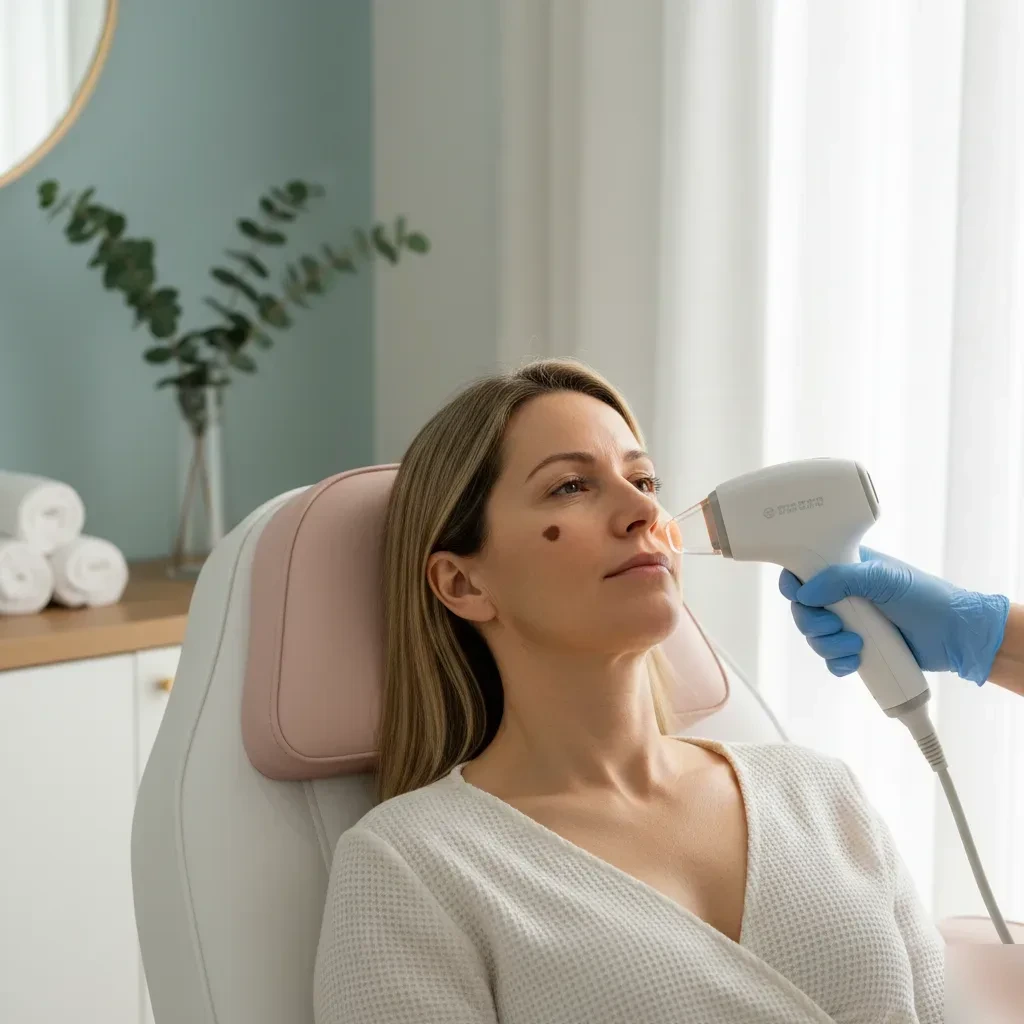
At the start of your very first melasma treatment appointment at our Murrells Inlet practice, we'll be spending the first part of your consultation closely looking at your pigment. We use a Wood's lamp to determine the depth of your pigmentation, which is important because pigment can sit in your epidermis, or in your deeper dermis layers, and we need to know where the pigment is located before we begin any treatments.
We are also going to need to know a little more about your story. Did your melasma begin or worsen while on birth control? Are you currently on, or have you been on, hormones? Do you have heat or sun-induced melasma and do you spend too much time out in the sun unprotected?
We can skip this step if we aren't going to treat the trigger(s), but then we're just treating the symptoms, and we see this all the time. Patients have tried so many products and so many therapies, and cannot figure out why their melasma hasn't cleared, until they find out there is a hormonal component we weren't addressing previously.
What will a Melasma Treatment Appointment Entail?
Here is what a typical melasma appointment looks like after we have had a chance to examine your melasma:
- Cleanse and prep skin to allow for better penetration of products
- Apply treatment (chemical peel or targeted treatment, depending on pigment depth determination)
- Monitor and observe skin reaction
- Put on sunscreen and aloe before you head out. There is nothing I could accomplish by wasting your money on a service that leaves you unprotected from the intense sun of Murrells Inlet.
A melasma treatment takes approximately 30 to 45 minutes. For many of our Inlet Square clients, we can provide a lunchtime same-day melasma treatment. Are you concerned about it being painful? I promise it is not.
The sensation is actually warm and ticklish rather than painful; I have never had a client grip the armrests during treatment. In nine out of ten cases, my patients describe the procedure as being much easier than they anticipated. Some redness may occur post-treatment, although it will likely vanish within a few hours. We will provide you with explicit aftercare guidance to outline your dos and don'ts after treatment.
Whether that be for right after the procedure, the morning after, or for a week following, the steps will be clear to you.
Maintaining Your Results Through The Year-Round Sun
You would not treat melasma if it just grew right back again in two months.

Of course, that is possible, considering April through October in Murrells Inlet is the time of the year without a break in sun. In fact, it is mild enough this winter to cause melasma to flare if you are not careful. Our standard guidance to all melasma patients is this: The results of a treatment are directly linked to your sun protection. We aren't trying to mislead you or give you any "" advice.
This is just the reality of what happens with melasma. UV radiation remains the #1 factor in causing melasma to recur; as a result, whatever success we achieve in the treatment room will depend on your habits once you leave. These are the elements you need for your results to stay consistent:
- Daily SPF 30 (or stronger) broad-spectrum sunblock, including days when the Marshwalk is overcast
- Sunblock should be reapplied every two hours during the day; the time of day is not an excuse to skip application, nor is it only necessary for the beach
- Cover with a hat for anything more than a stop at the store
- Purchase physical sunscreen, which includes ingredients such as zinc oxide or titanium dioxide which do the physical block of UV rays and rest on top of the skin.
As I shared earlier, nine out of ten clients who return because of recurring pigmentation issues have a primary factor in common: they do not have the right level of sun protection in place. Applying a light amount to the face in the morning and then spending a full day at Huntington Beach State Park is not going to be sufficient for prevention. You will want to make certain you are applying a generous amount of sunscreen (about the size of a nickel) to your face, and reapplying after every time you've been in the water, sweat up, or wipe down with a towel. We also encourage you to minimize being in the peak sun when possible; during the summer, we have no choice but to deal with 11 am to 3 pm being extremely harsh weather.
If you are spending the day boating or swimming, take the time to identify shady areas you can visit from time to time. Some of our patients will also maintain the results of a treatment with periodic follow up melasma treatment. This may entail light chemical peels every few months, to keep your skin evenly toned as your daily topical routine works to keep your complexion clear. We will develop a schedule for you once we evaluate the results of the first treatment.
There is no "magic" for melasma, but there is a difference between keeping it clear and having to re-treat from scratch. Consistent daily protection is the way.
Frequently Asked Questions
Common questions about melasma treatment services in Murrells Inlet
Does living near the coast in Murrells Inlet make melasma harder to treat?
Yes, coastal living does make melasma harder to treat, but it's not impossible to manage. Water and sand reflect UV rays back at your face, so even sitting under an umbrella still exposes your skin. High humidity can thin your skin's protective barrier over time. Overcast days here still deliver up to 80 percent of UV radiation. Your treatment plan has to account for where you actually live, not a generic protocol built for someone inland.
Why does my melasma keep coming back after I treat it?
Your melasma keeps coming back because the underlying trigger was never addressed. Over-the-counter creams can lighten the surface, but the melanocytes underneath keep misfiring. Hormonal shifts, heat, and daily sun exposure along the Murrells Inlet coast can all restart the cycle. A plan that only treats what you see in the mirror won't hold. You need a strategy that looks at your skin type, hormonal history, and real daily habits.
What melasma treatments actually work?
The treatments that move the needle most are chemical peels, medical-grade facials, microneedling, and clinical-strength pigmentation protocols. One treatment alone rarely gives lasting results. Stacking two or three together over a series of visits works better. Aggressive treatments can actually trigger more pigmentation in melasma-prone skin, so a gentler, layered approach is smarter. Your skin type, how deep the pigment sits, and what's driving it all shape which combination is right for you.
Can men get melasma too?
Yes, men absolutely get melasma, and it's more common than most people realize. Many guys come in confused about dark spots that appeared out of nowhere. The same triggers apply: sun exposure, heat, and hormonal changes can all cause it. Living an outdoor lifestyle in Murrells Inlet means men here often get more cumulative sun hours than they track. If you have unexplained dark patches on your cheeks or forehead, melasma is worth looking into.
What should I expect during my first melasma treatment visit?
At your first visit, we look at the full picture before touching your skin. That means reviewing your skin type, hormonal history, and daily sun habits here in Murrells Inlet. We assess how deep the pigment sits and what's most likely driving it. From there, we build a layered plan and start conservatively. We adjust based on how your skin responds over time. You won't leave with overnight results, but you will leave with a clear, realistic plan.
Does heat alone worsen melasma, or is it just sun exposure?
Heat alone can worsen melasma, even without direct sun exposure. Research shows that visible light and infrared warmth both trigger melanocytes to overproduce pigment. That includes driving with your windows down on Highway 17, exercising outside, or sitting near a bright window. Most people only think about beach days, but those everyday moments add up fast. In a humid coastal environment like Murrells Inlet, heat exposure is something your treatment plan has to account for.