
What's Covered on This Page
- Sun Damage and Skin Concerns Chemical Peels Actually Fix
- Choosing the Right Peel Depth for Your Skin Type
- Is a chemical peel safe for skin that gets a lot of sun exposure in Murrells Inlet?
- How long does it take to recover after a chemical peel?
- What should I do to prepare for my chemical peel appointment?
- Can a chemical peel fix the dark spots and uneven tone I've had for years?
- Do I need the strongest peel available to see good results?
- What skin concerns do chemical peels treat most effectively?
Sun Damage and Skin Concerns Chemical Peels Actually Fix
If you live near the water, you are aware your skin is taking its fair share of abuse. Murrells Inlet has high UV levels almost all year, and we see the results of this in our clients on a daily basis.
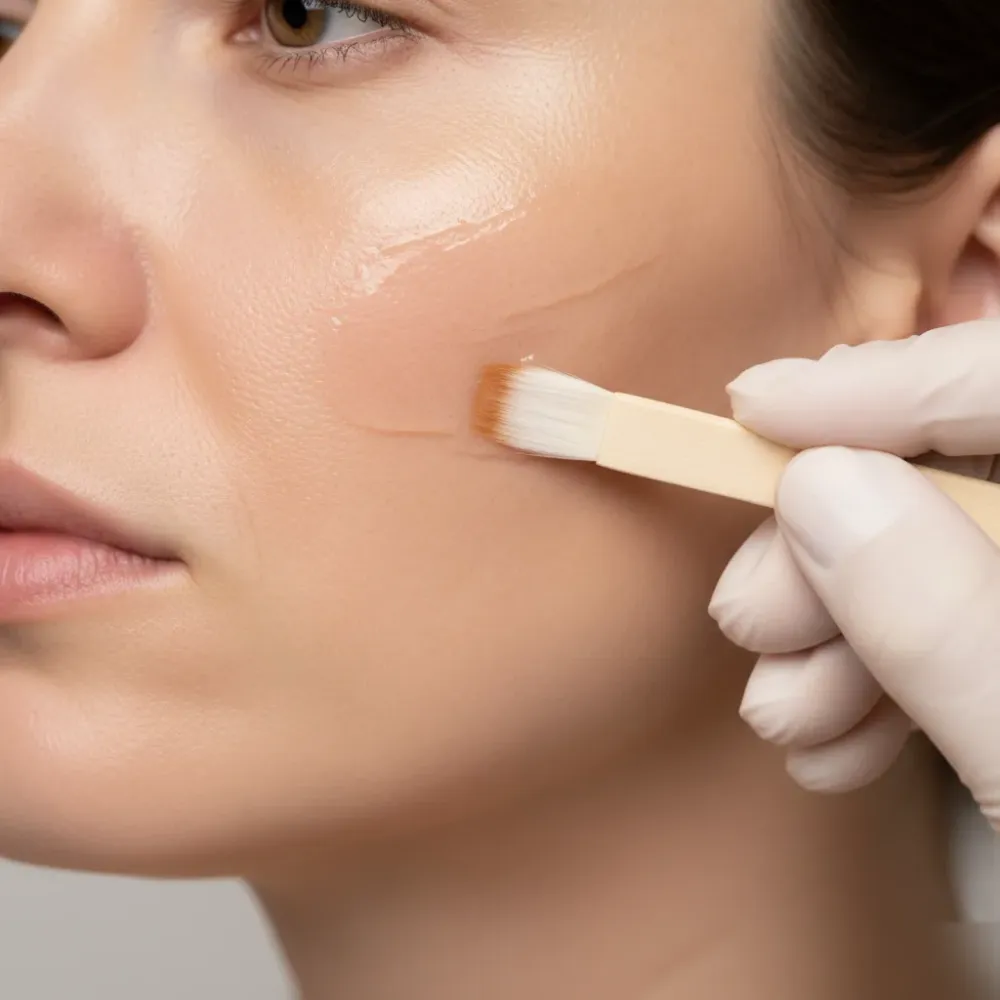
Dark spots have developed on your face. Your forehead has become uneven and bumpy. Your skin isn't quite the same color throughout, and something you cannot treat at the pharmacy. These aren't just minor irritations; they are indications of long-term skin damage.
Chemical peels work by systematically and uniformly stripping damaged cells off. This encourages healthy tissue to develop in their place. And this isn't just clever marketing; the American Academy of Dermatology affirms that chemical peels can be a successful treatment for fine lines, discoloration, and solar damage.
Here is what we can treat with chemical peels:
- Sun and age spots that can cause individuals to look far older than they are.
- Melasma, or skin hyperpigmentation, that can appear or disappear as the seasons change.
- Rough skin texture due to years of weather exposure.
- Acne scars that were never treated on their own.
- Smile lines and fine lines.
Several of my patients mentioned that they have applied a plethora of various products over the months that did not produce the effect they desired. I think we all see why there is a limit to what topical applications can do to the top layer. A chemical peel penetrates a bit deeper via a process that hastens your skin's natural cell turnover rate. It's this that makes the difference.
Not every skin worry needs every depth of peel. A superficial peel might be a better choice for a few lighter spots for example, while a more persistent melasma may require a medium-deep peel. We determine what is the most suitable peel for your skin and your condition before it is ever applied.
Individuals who are upset with how their skin is appearing usually have a problem with their treatment approach as opposed to a skincare issue. You will not undo a number of years of UV light exposure with a tube of serum. You'll need a chemical peel if you are looking to address the actual issue, not just conceal it.
If you are unsure whether or not a skin problem you have is treatable, it likely is. We will talk about that at your initial appointment.
Chemical peels are a key part of our esthetics services in Murrells Inlet.
Choosing the Right Peel Depth for Your Skin Type
Not every depth of peel works for every single skin type. It's actually as simple as that.

Occasionally, patients come in thinking they require the deepest peel we offer. More than not, they don't. A superficial peel can do an equal job, for that particular situation, without the long downtime or extensive side effects. We just need to know the specific depth that will be ideal for your skin at the moment, not what the internet suggests, or what your friend had. Your skin condition is what matters here. At our Murrells Inlet location, we use the chemical peels of the following depth levels:
- Superficial peels, which work in just the outer layer of skin. This is ideal for dull skin, mild sun damage and slight texture concerns. Back to work, same day.
- Medium peels, which work a little deeper to address pigment, fine lines and moderate acne scarring. Several days of peeling, some redness, etc.
- Deep peels, which work even deeper for deep wrinkles and more extensive pigmentation. Recovery from this is much longer, with extra home-care requirements.
Your skin type is a big factor in our peel choice. Darker skin types might have a higher chance of developing post-inflammatory hyperpigmentation with a deep peel. We take that into account when we select the procedure. Lighter skin types may be better able to handle stronger peel formulations, but we also take their sensitivity into account. But we go beyond that, we also take into consideration skin damage from any sun exposure in your past. The time people enjoy around MarshWalk, and the waterfront year-round, makes this a common topic when we're discussing peels.
Generally, we start with lighter peels and move up. Those who are trying a chemical peel treatment for the first time might have a superficial peel to determine how your skin repairs and heals from it, plus your tolerance for pigmentation changes. Then we have a better sense of what a follow-up peel might be if your skin needs something stronger. A deep peel with no history of a tolerance for such peel treatments might be dangerous and we can't put your face at that risk. Sometimes, a medium peel can offer results you might expect from a deep peel. It's a matter of using the right tool, not the biggest one.
Preparing for a Chemical Peel
Preparation is as critical as the treatment itself, and we tell our clients the same thing every time. A lot of clients are surprised to hear that the preparation process actually starts one week before your appointment. You may think you can come as you are, but you'll want to prepare your skin prior to your visit! Not preparing your skin correctly could lead to uneven results, increased redness, and longer downtime than required. Here's what we tell our clients to prep their skin for a Murrells Inlet chemical peel:
- No retinol use 5-7 days prior to your visit: Products with Retinol will thin the outer layer of your skin, which will result in a chemical peel penetrating your skin unevenly or too strongly.
- Don't Wax, thread, or dermaplane 1 week prior: Waxing, threading, and dermaplaning are all methods that damage your skin, resulting in micro-trauma to the skin's surface. A chemical peel over recently damaged skin may result in irritation.
- Avoid the sun as much as you can: Skin that is burned or tanned will react unpredictably with the peeling solutions. And it can be difficult to avoid the sun while living along the Inlet during the summer, but not to worry, our answer is simple; wear SPF 30+ every single day in advance of your visit.
- No harsh scrubs and exfoliants 3 days prior to your visit: Your skin is going to be exfoliating, so you really don't need any additional exfoliating products. Skip the exfoliants!
- Arrive on clean skin without any makeup: Come to your appointment without any makeup, sunscreen, or moisturizer on your skin. We'll wash your skin, but showing up clean saves us time removing products and gives your esthetician a clean slate to work with.
And this isn't just common sense; our clients who adhere to these tips report less peeling in the days after their appointment!
When you call to schedule your appointment, we ask that you tell us about any prescription medications you might be on as certain antibiotics and acne drugs may increase the sensitivity of your skin. One medication, Doxycycline, is known to increase your skin's sensitivity and should definitely be brought up in advance of your appointment. Be sure to inform your esthetician if you have a history of cold sores because chemical peels can potentially trigger cold sores on the lip or around the mouth.
If you have additional questions about chemical peel preparation, don't hesitate to contact us before your visit. We are happy to talk you through it in advance rather than risk your skin having an adverse reaction!
When Is The Best Time To Schedule A Chemical Peel On The Grand Strand?
In a word, fall or winter. Most of our clients schedule chemical peels with us from October until March. Why is this the most popular time for chemical peels on the Grand Strand? Right after your peel, skin will be more sensitive to the sun and the elements. This is why we recommend having a peel during fall or winter when the weather is cooler and there is less time in the sun. It can be enough challenge to heal from a peel here in Murrells Inlet during summer alone. Think of the added challenge to re-apply your SPF every two hours, wear sun-protective clothing and remain in the shade as much as possible. That takes discipline and attention that most patients don't find worth the effort during beach season. We recommend the following for the best timing of your chemical peel:
- Schedule your first chemical peel in September or October to you have fully healed by the end of the calendar year.
- For a series of light peels, schedule a follow-up treatment 4 to 6 weeks after your first peel.
- If you are scheduling a deeper peel for the year, do so in December or January to you are spending the least amount of time in the sun.
- If you want to schedule a lighter chemical peel to pre-condition your skin for the upcoming summer, schedule a "prep" chemical peel during spring as early as March.
Can I get a chemical peel in the summer? We do see patients year-round for our chemical peel treatments. Generally, we prefer to recommend lighter peels during summer months as a way of shortening recovery. If you're planning a week-long family reunion in July at Huntington Beach State Park, we'd probably avoid suggesting a medium depth chemical peel at that point! We find the majority of our new patients come in to get their first chemical peel done in the fall season with their second treatment scheduled in the late winter months. You can see the results in your skin as we head into spring, and they continue to build on top of each other. There's no reason scheduling your treatment for our Murrells Inlet chemical peel treatments should be difficult. You just need to sit down and go over your schedule for the year, as well as your goals. The earlier in fall you can book the better. Our schedule tends to fill up quite quickly after October.
What do I expect to happen following my Chemical Peel and How do I Protect Results?
Your skin may not look the prettiest for a short period of time. That's normal. That's how it's supposed to look. Many of our patients in Murrells Inlet expect to peel, but they're not exactly sure how long it will last. You can see mild flaking for two or three days after a light chemical peel. Or you may experience significant skin shedding for up to seven days following a medium peel. We give you all this information so there's no surprises when you leave our office. After the redness subsides and the flaking stops, your new skin will be revealed and will look smoother and more even. Here are the top things we tell all of our clients during the first few days following a treatment in Murrells Inlet:
- Don't touch your face with your hands.
- If your face does peel and you itch or want to pick, don't do it!
- Use the gentle cleanser we recommend and your moisturizer. Avoid using anything with active ingredients on your skin for a minimum of 48 hours.
- Use a sunscreen that's SPF 30 or greater daily. If you've gone outdoors for a good stretch of time (i.e., walked on the MarshWalk or just about anywhere in Murrells), please reapply.
- Minimize your workouts for at least 24-48 hours. Sweat on peeling skin is very irritating.
- Avoid sun exposure for 14 days whenever possible. You can't skip the sunscreens. Chemical peels render your skin extremely more sensitive to the sun and it's not uncommon for us to see patients who have undone their perfect peel simply because they went out for a few hours on the boat without sunscreen. The Marsh doesn't just let the sun off duty for a few days. Even a little sun damage can undo all of your efforts.
Most people see improvement within 7-10 days, fine lines have been reduced, age spots have lightened, and the texture is improved in ways no amount of primer can deliver. Most of the time, one treatment is the beginning, not the end of the road. In fact, it's more common for us to recommend a series of peels, as outlined by the American Academy of Dermatology, to see significant long-term improvements in uneven pigmentation and even the most severe of acne scarring. The space between the sessions is a few weeks, at minimum. After your first treatment, your skin may feel tight for the first several days. That's a good thing. Tightness is what we want and it tells you the treatment is having an effect. We recommend using a hydrating moisturizer to help with the feeling but we don't want to do anything too heavy. Not sure if your skin is healing right? Give us a call! We like to check in with you between treatments and make sure you're completely satisfied!
Chemical Peels is one of the esthetics and facial services at Jolie Visage in Murrells Inlet. If you're considering more than one treatment, we'll help you build a plan that fits your goals.
Frequently Asked Questions
Common questions about chemical peels services in Murrells Inlet
Is a chemical peel safe for skin that gets a lot of sun exposure in Murrells Inlet?
Yes, chemical peels are safe here, but we adjust the approach based on your sun exposure history. Murrells Inlet's coastal sun is intense most of the year, and that affects how your skin reacts to peel solutions. We always ask about your outdoor habits before choosing a peel depth. We also require SPF use before and after treatment. Sun-damaged skin actually responds really well to peels when we prep it correctly first.
How long does it take to recover after a chemical peel?
Recovery depends on which peel depth you get. A superficial peel has almost no downtime — you can go right back to your normal day. A medium-depth peel usually means three to five days of peeling and some redness. A deep peel takes longer and needs careful aftercare at home. We talk through all of this before your appointment so you can plan around your schedule.
What should I do to prepare for my chemical peel appointment?
Stop using retinol about a week before your visit and skip all exfoliants three days out. Avoid waxing or threading in the week leading up to your appointment. Wear SPF 30 or higher every day before you come in. Show up with a clean face — no makeup, moisturizer, or sunscreen. Clients who follow these steps heal faster and get more even results from their peel.
Can a chemical peel fix the dark spots and uneven tone I've had for years?
Yes, chemical peels are one of the most effective treatments for dark spots and uneven pigmentation. The American Academy of Dermatology backs this up. Peels remove damaged skin layers so fresher, more even skin can grow back. Over-the-counter products only reach the surface — they can't undo years of sun damage the way a peel can. The right peel depth makes a real difference in how quickly you see results.
Do I need the strongest peel available to see good results?
No, most people don't need the deepest peel to get the results they want. A well-chosen medium peel often delivers what people expect only from stronger treatments. We start conservative, especially if you've never had a peel before. That lets us see how your skin responds and build from there. Jumping straight to a deep peel without that baseline is a risk we won't take with your skin.
What skin concerns do chemical peels treat most effectively?
Chemical peels work really well on sun spots, melasma, rough texture, acne scars, and fine lines. We see all of these regularly with clients in Murrells Inlet. Melasma that gets worse every summer is one of the most common concerns we treat. Acne scars that never fully faded on their own also respond well to the right peel. During your consultation, we figure out which concerns apply to you and match the peel to your skin.