
What's Covered on This Page
- How Your Specific Scars Impact Your Treatment Options
- How Dermatologist Procedures Rejuvenate Skin
- What to Expect Through Your Complete Treatment Series
- Post-Treatment Care
- How many sessions will I need to see real results on my acne scars?
- Does Murrells Inlet's humid, sunny climate affect how my skin heals between treatments?
- What is the difference between microneedling and a chemical peel for acne scars?
- Can flat red or dark marks from old breakouts actually be treated?
- Is there a best time of year to start acne scar treatments in Murrells Inlet?
- What should I do to prepare for my first acne scar treatment visit?
Need acne scar treatments?
Book An Appointment. Call Jolie Visage Rejuvenation Centre now.
How Your Specific Scars Impact Your Treatment Options
Acne scars do not all appear the same, nor do they have to be treated the same way.
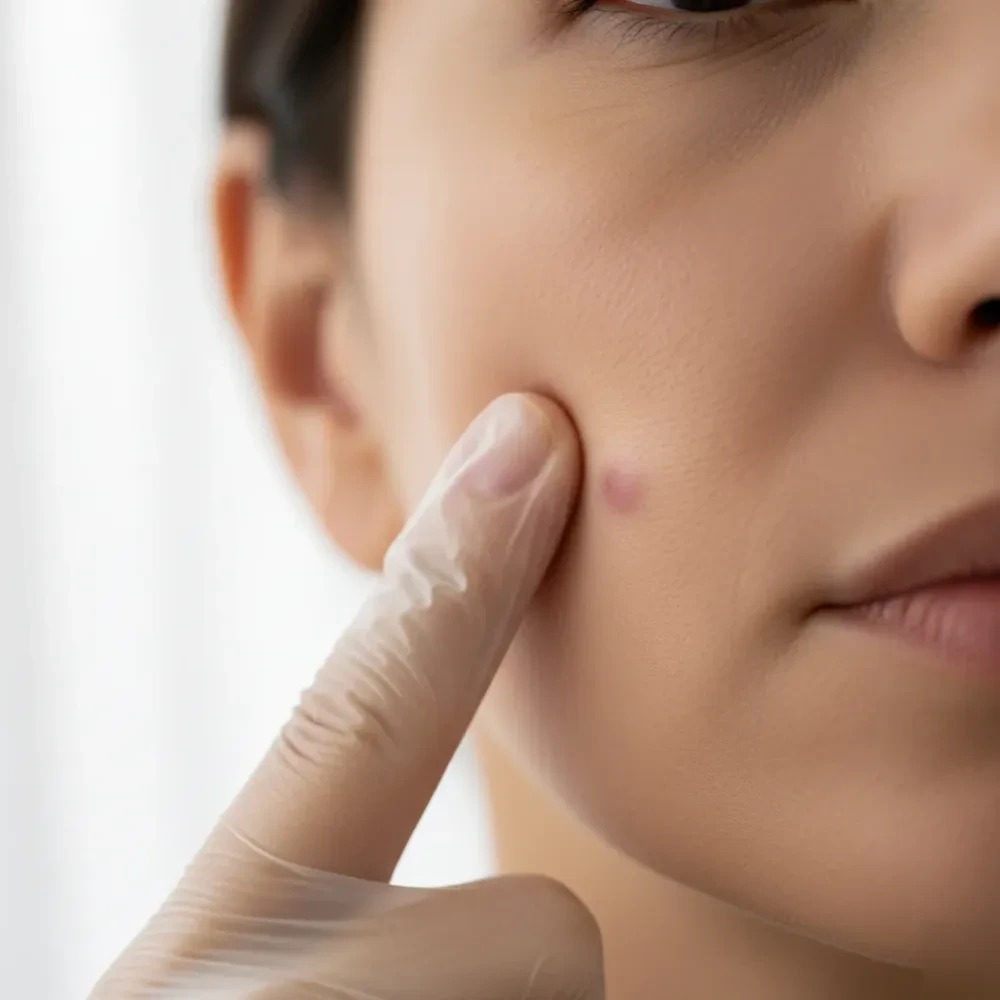
Many of our clients arrive at the clinic with the general idea that they just have scars that need to be removed. However, when we take a closer look, we usually find at least two, sometimes three separate types of scars on the same person's face. It is a very important aspect that many people don't understand. A therapy that works perfectly on one type of scar does nothing to another type.
Below are the most common acne scar types we see in our Murrells Inlet office:
- Ice pick scars: deep, small scars that look like they were caused by a sharp object puncturing the skin.
- Boxcar scars: larger, depressed marks with distinct edges, that somewhat resemble a small crater.
- Rolling scars: wide, shallow depressions that create a rippled texture to the surface.
- Raised or hypertrophic scars: bumpy, raised marks or scars that stand above the surface of the skin.
- Post-inflammatory discoloration: flat, brown or red marks left behind after a breakout subsides.
That's why identifying scar types matters for your acne scar treatment: ice pick scars are deep in the skin, so you'll often need a deeper treatment like microneedling or a stronger chemical peel. Rolling scars may respond more to collagen-producing treatments, such as chemical peels or microneedling, that lift up the skin from underneath. Post-inflammatory discoloration might respond very well to just medical-grade facials or lighter peels.
Typically, the best outcomes come with a mix of treatments. We'll take a close look at your skin during your consultation. No guessing.
Here's a frequent inquiry from our clients in the Inlet Square area: "Can't I have one treatment and be done?" Sometimes. However, most scars are accumulated over a few years, and they're not going away in just one session. Your skin has to take time to rebuild collagen and replace cells. According to the American Academy of Dermatology, the majority of acne scar treatments take multiple treatments spaced several weeks apart to make noticeable changes.
On the flip side, when you determine what kind of scarring you've got, you should be in an excellent position to know what to expect during treatment.
How Dermatologist Procedures Rejuvenate Skin
Most folks who come to our Murrells Inlet center have tried creams, lotions, serums and devices in their homes already. They've been hoping for months, even years for some results, which hasn't happened. And that's okay, the acne scars you want removed need a stronger approach than any pharmacy product can deliver.
You know this feeling: someone comes to the clinic and points at the pits in their skin or the red marks covering their face they've tried to conceal with makeup.
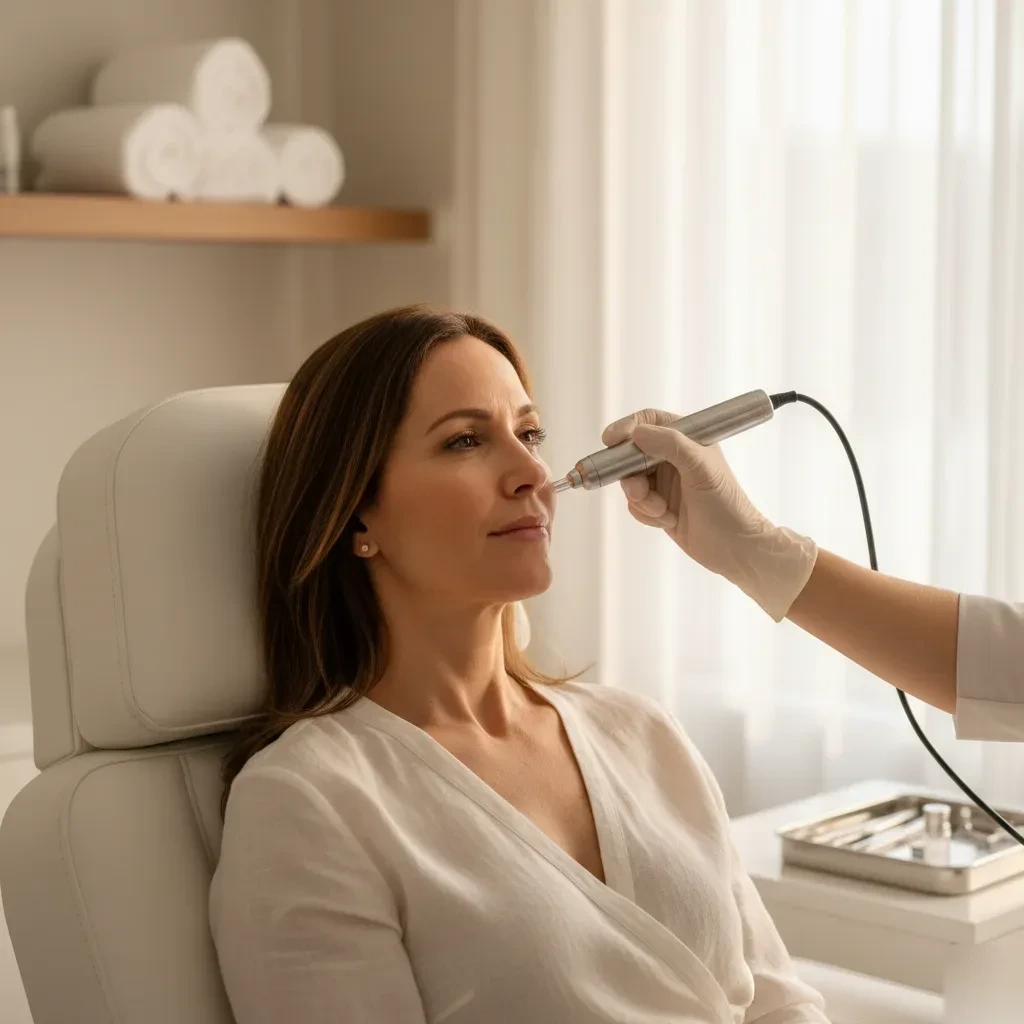
While topicals are helpful, only professional treatments can effectively break up and dissolve old scars, and help fill those in from underneath with healthy new collagen production. Here's what we use, depending on your skin and your scars:
- Microneedling uses tiny needles to create small channels to jumpstart the skin's healing process and collagen production in rolling and boxcar scars;
- Chemical peels remove damaged layers of skin, allowing new healthy skin to rise to the surface, especially effective for red or discolored scars;
- PRP (Platelet Rich Plasma) facials combine the benefits of microneedling with your body's own growth factors for enhanced, accelerated skin rebuild;
- Microdermabrasion removes the top dead layer of skin, effectively treating more superficial scars to improve the skin texture and overall smoothness of the skin, and is best performed over a series of sessions.
All scars aren't created equal and what we do with an ice pick scar is different from a flat discoloration on the cheeks and jaw. Some patients benefit most from multiple different modalities, using one treatment every other month. We help determine that together during your first treatment visit. Nine times out of ten, the best results come from combining approaches.
That's the reality of our job: there's no quick fix and skin needs time to heal. It's a process that involves the body growing new collagen and bringing up new skin cells, all which takes time to do. We're also asked if our scars can even be fixed, which seems like a strange question to ask, but it's the question we get asked the most. That's almost always a "Yes!" It's just a matter of choosing the right tool for your skin and your scar.
What is the best time of year to start treatment on the Grand Strand? We ask our patients this question all of the time. There's no wrong time to start acne scar treatments. But some months give you a real advantage.
Fall and winter are ideal. Most acne scar treatments make your skin more sensitive to UV radiation from the sun, for both days and weeks at a time. When it's cooler in Murrells Inlet in these months of the year, you naturally spend less time in direct sunlight during the day; the MarshWalk is not as busy, and you're not likely wearing shorts and a tank top walking around town every afternoon. Less sun exposure means quicker healing from your skin care procedures, less UV damage and dark spots on your skin as a result of exposure, and overall better treatment results.
Starting treatments in October or November also offers you a great timing advantage. Most acne scar treatments require several treatments that need to be spaced four to six weeks apart. By starting treatments in the Fall, you can complete the series during the Spring, before you're on the beach! You'll be walking around with fresh, smooth skin on your face, not needing to cover up with heavy makeup or wearing hats and avoiding the boardwalk!
Does this mean that you should wait to do treatments until October if it's already March? No. You can start treatments year round. We work with acne scar patients throughout the year, right here in Murrells Inlet.
Those who choose to begin treatment during the summer simply need to be a little more vigilant about sun protection, and about limiting the direct sunlight we all enjoy between appointments. An SPF 30 or better is essential, and we review this recommendation with each patient at the conclusion of their appointment.
And what does that really look like? Consider the patient who calls us in January, having examined their scar-ridden skin with fresh eyes through the holiday season. They start immediately, and by the time the Inlet begins to heat up in May, they have completed the full treatment series and are delighted with their results. But what happens if life gets in the way and doesn't line up quite that way?
We've seen that, too! The reality is that the best time to begin treatment is exactly when you feel ready to get started. Sometimes, the idea that you "should" wait until another month to begin results in delaying the start of treatment for a whole year. No one will benefit from putting off treatment.
What to Expect Through Your Complete Treatment Series
Many people assume that treatment of their acne scars will be a single office visit. Unfortunately, that's just not the case. Acne scar treatments are layered, with intervals in between treatments while the skin produces new collagen and regenerates itself.

What does treatment across a series of sessions look like? Here is what our clients in Murrells Inlet can expect:
- The first session: We treat the scar's surface to break up fibrous scar tissue. Mild erythema may last a couple days. Recovery begins almost immediately.
- The second and third sessions: We begin treating the collagen loss at deeper levels within depressed or rolling scars. Clients report a discernible improvement in the texture of their skin.
- The fourth through sixth sessions: Fine-tuning. We treat areas that need a bit more tone correction or softening, and treat scarred areas that aren't responding as quickly. Clients report an improvement in their skin's appearance, even in natural light.
Acne scar treatments usually take place at four- to six-week intervals. We don't want the intervals to become so frequent as to irritate the skin. The time between sessions gives your skin a chance to heal, while producing new collagen.
In nine out of 10 cases, clients will call back at the time of their third session and say, "I only wish I had started this sooner." By that time, clients have experienced a boost in their self-esteem as they begin to see improvement.
Patients will be given a home care plan to follow between appointments. We recommend use of a mild cleanser, an SPF product every day, and a skin rejuvenating serum for night time. Avoid use of exfoliating products during this time. The skin is healing from the inside, and needs some assistance and support.
In some cases, you may notice that your skin looks worse before it starts looking better. That's perfectly normal. The topmost layers of the skin are shedding to make way for new skin to grow below it. In a very real sense, that is the treatment's "job," and we like to see that happen.
Not all acne scars heal at the same pace. Shallow boxcar scars often fade more rapidly, while deeper ice pick scars require a longer timeline. We'll document your journey with before-and-after photos taken at every appointment so you can easily observe the subtle improvements that aren't always obvious between visits. to begin your plan? Contact our office, and we'll design a series of acne scar treatments suited to you.
Need help with acne scar treatments?
Book An Appointment. Jolie Visage Rejuvenation Centre is ready to help.
Post-Treatment Care
You've taken the steps to improve your skin, now protect your investment with smart daily habits and skincare choices.

The initial three days post-acne scar treatment are critical. This is when your skin begins the healing process, generating fresh collagen and restructuring itself below the surface. What you do during this period can be the difference between a great outcome or a disappointing one. Every patient we treat after leaving the office receives the same advice: approach your skin as though it is sunburned for a couple of days.
Use only a gentle cleanser, avoid any aggressive skincare ingredients, and never pick at your skin.
Aftercare Instructions
We will review these steps with you before your departure:
- Use SPF 30 sunscreen every morning, even on overcast days in Murrells Inlet by the ocean
- Avoid using retinols and chemical exfoliants for five to seven days
- Maintain skin hydration with a basic, unscented lotion
- Avoid direct sun exposure, particularly in beach areas like the Marshwalk
- Wait 24 to 48 hours before resuming heavy exercise
Most of our clients with the best long-term outcomes are those who stick closely to aftercare instructions. It isn't difficult, it just requires a few days of discipline.
Protecting your skin from UV rays is paramount. If the sun hits damaged skin, it causes melanin production that can create post-inflammatory hyperpigmentation in the same locations your scars previously existed. This is the result of a patient forgetting sunscreen for "an afternoon" at the beach. One single day is enough to set your progress back.
The benefits from scar therapy keep developing for weeks following the procedure. It simply doesn't happen overnight. According to the American Academy of Dermatology, fresh collagen production can continue for as long as six months following specific procedures. Patience is a key element of the process.
Seeking a treatment series? Get in touch with our practice so we can discuss your options.
Additionally, it's wise to arrange a follow-up visit in 4-6 weeks. This gives our specialists a chance to observe how your skin has recovered, modify your therapy if necessary, and assess whether additional acne scar treatments are beneficial. It's normal for our Murrells Inlet clients to return for multiple sessions over a span of months. Significant improvement takes time, but you'll notice results improving with each session.
Acne Scar Treatment is one of the medical spa services at Jolie Visage in Murrells Inlet. If you’re considering more than one treatment, we’ll help you build a plan that fits your goals.
Frequently Asked Questions
Common questions about acne scar treatments services in Murrells Inlet
How many sessions will I need to see real results on my acne scars?
Most people need a series of treatments spaced four to six weeks apart. One session can show improvement, but deeper scars like ice pick or boxcar types usually need more time. Your skin has to rebuild collagen between visits. We map out a realistic plan at your first consultation so you know exactly what to expect. No guessing, no vague timelines.
Does Murrells Inlet's humid, sunny climate affect how my skin heals between treatments?
Yes, it does. The Grand Strand gets intense UV exposure most of the year. After treatments like microneedling or chemical peels, your skin is more sensitive to sunlight for days or weeks. That means SPF 30 or higher is non-negotiable between sessions. We go over sun protection with every patient before they leave. Starting treatment in fall or winter gives your skin the best healing conditions here.
What is the difference between microneedling and a chemical peel for acne scars?
Microneedling creates tiny channels in your skin to trigger collagen growth from below. It works best on rolling and boxcar scars. Chemical peels remove damaged surface layers so fresh skin comes through. They are especially helpful for flat discoloration left after breakouts. Many patients get the best results combining both over a treatment series. We decide which approach fits your scar types after looking closely at your skin.
Can flat red or dark marks from old breakouts actually be treated?
Yes, post-inflammatory discoloration responds well to treatment. These flat marks are not true scars, so they often need fewer sessions than pitted or raised scars. Medical-grade facials and lighter chemical peels can fade them noticeably. The key is not confusing them with deeper scar types, which need a different approach. We identify exactly what you have during your first visit so we treat the right thing.
Is there a best time of year to start acne scar treatments in Murrells Inlet?
Fall and winter give you a real advantage here in Murrells Inlet. You are naturally spending less time in direct sun, which helps your skin heal faster between sessions. Starting in October or November means you can finish a full treatment series by spring. That puts you in great shape before beach season. That said, we treat acne scars year-round. The best time to start is when you are ready.
What should I do to prepare for my first acne scar treatment visit?
Come in with clean skin and no heavy makeup if possible. Let us know about any skincare products you use, especially retinoids or exfoliants, since some need to be paused before treatment. Avoid tanning or heavy sun exposure in the days before your appointment. We will review everything at your consultation and walk you through any specific prep steps based on the treatment we choose for your skin.